
The exact location of the first synagogue is a mystery, but the Cardiff and Merthyr Guardian reveals that in 1846 a room at the Cavalry Barracks in Union Street was donated to the congregation ‘free of all expense’ by Charles Vachell, ‘a liberal-minded townsman’ and by 1853 religious services were held in a large room in Trinity Street. However, as Bute Street became the focus of settlement the congregation moved to larger premises near the railway bridge there.
The 1840s and 1850s
The Jewish community grows
3.15 Miles
LOCATION: Bute Street
The 1840s and 1850s
Like Cardiff itself, the Jewish community grew impressively from 1839 with the opening of the Bute West Dock. Although Cardiff would never rival London or Manchester as a centre of British Jewry, it was quickly becoming the pre-eminent hub of Jewry in Wales.
1846 - 1853 First synagogue
1850s Jewish businesses
While there was never anything approaching a Jewish ghetto in Cardiff, there were certain streets in which Jewish businesses congregated and by the 1850s Bute Road (later Bute Street) became the hub of Jewish settlement. The Jewish community was proving itself a business community par excellence, with members including watchmakers, jewellers, 'slop'-sellers, tailors, pawnbrokers and general dealers. As early as 1855 it seems there were 27 businesses or shops registered to owners with Jewish surnames on Bute Road.
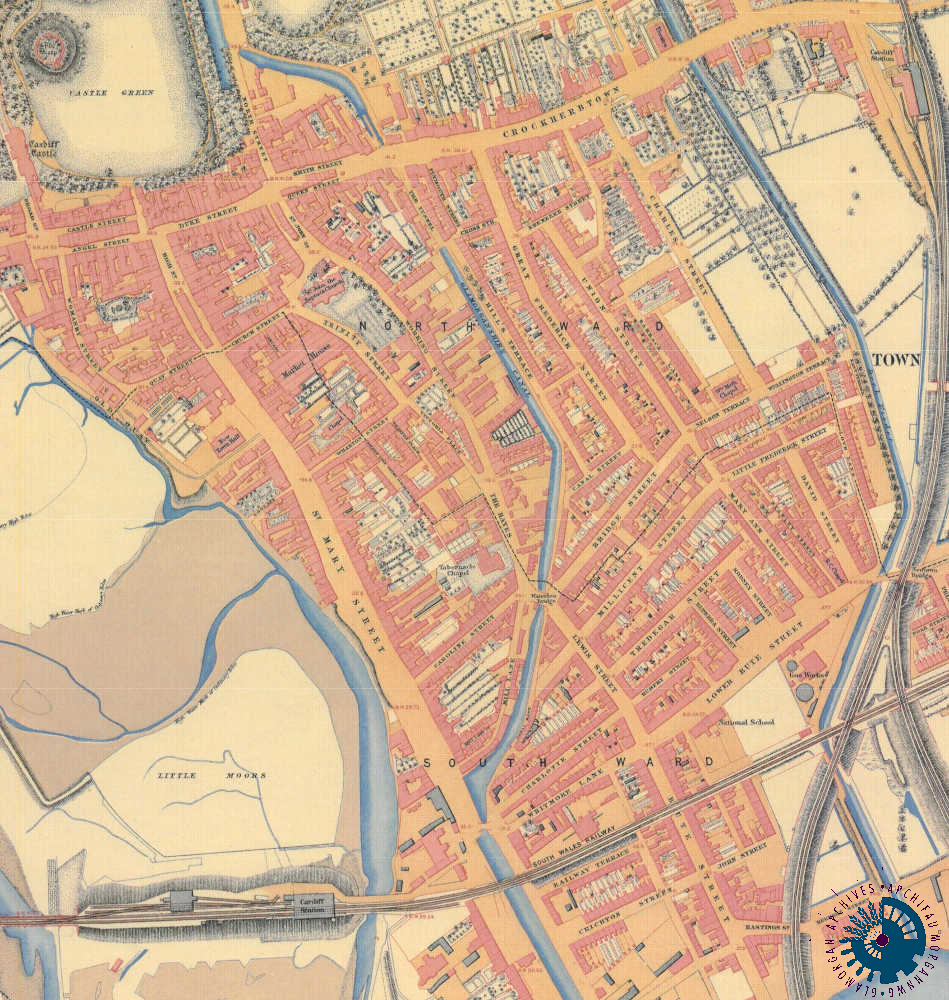
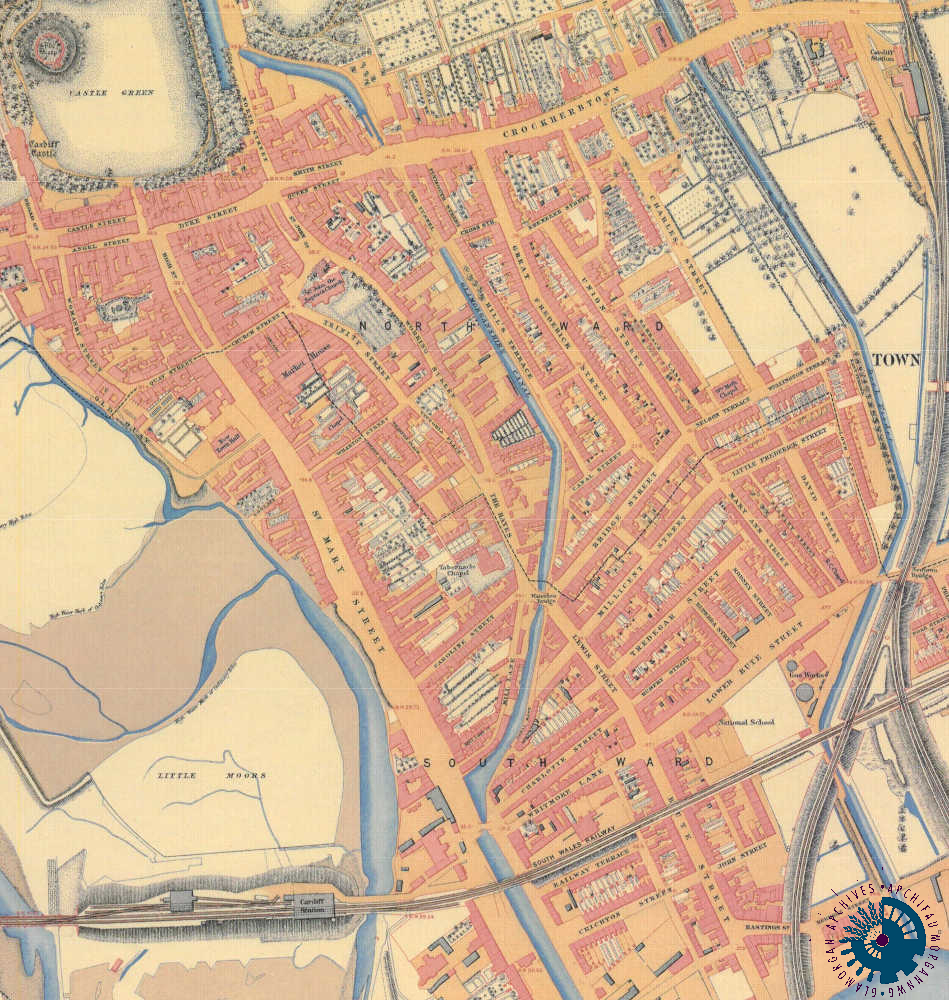
Cardiff 1851 map, originally drawn up by the Ordnance Survey in accordance with the Public Health Act.
Reproduced with the kind permission of Glamorgan Archives.
There are a number of reasons that business was appealing to the growing Jewish community. ‘Even the poorest observant Jews preferred self-employment in which they could stop work at Sabbaths and holy days. Hence the prevalence of small traders, who sometimes appeared briefly in the newspapers when they fell to the temptation of opening on a Sunday and were caught under the Sunday Trading Acts'[1] and certain trades such as clothing, jewellery and furniture were particularly available to Jewish settlers as they drew upon the existing skills of migrants from Eastern Europe.
As soon as enough Jews have settled in an area to form a Minyan (10 adult males), preparation would begin on a synagogue. People would hire an area for prayer, attempt to procure a plot to bury their dead, obtain scrolls of law, a shochet (ritual slaughterer), a mohel (circumcision performer) and a chazan (prayer leader, often the mohel and shochet as well) and then finally procure or build a synagogue and hire a Rabbi.
Sources (3) click to show
CONTINUE THE TRAIL
Trail
×
![]()