
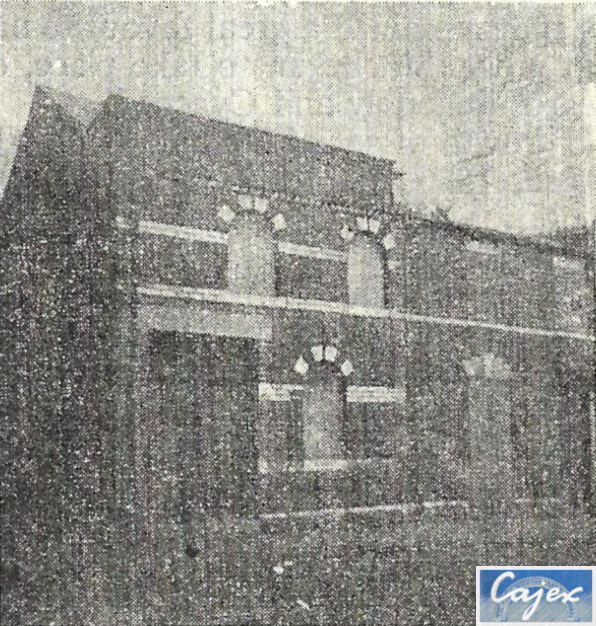
By 1887 news of a spilt in the Cardiff Community had reached the Chief Rabbi and, despite Hermann Adler's attempts to resolve the dispute, members of the opposing minyan withdrew their membership from East Terrace. The break-away minyan initially met for prayer in a rented room, possibly in Frederick Street, and in 1888 sought funds to purchase a house in Edward Place for conversion into a synagogue. The wardens of East Terrace, Louis Barnett and Henry Samuel, stated that the movement was in antagonism to the existing Synagogue and was quite unnecessary as there was sufficient accommodation in the present building for the whole of the Jewish community. They also believed that the opposition would crumble and disappear, and the members would re-join their congregation.
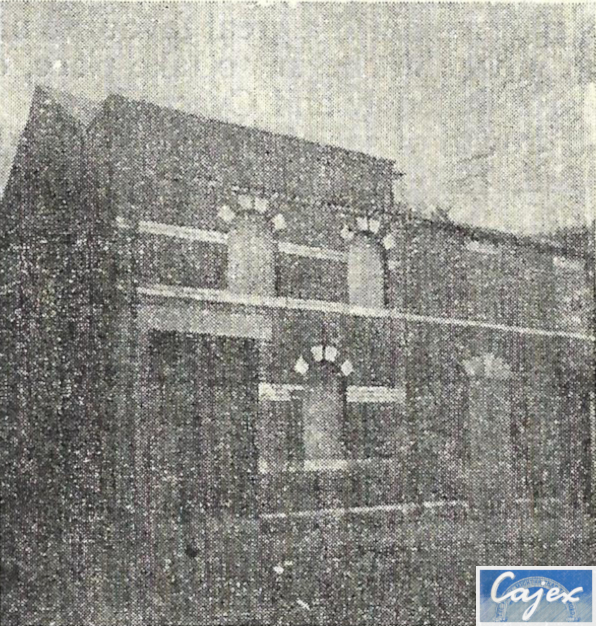
Edward Place Synagogue.
Image credit Cajex: Magazine of the Association of Jewish Ex-service Men and Women (Cardiff), July 1951, p. 30.
However, the rival minyan did not crumble and 5 Edward Place was established as a synagogue for the newly formed ‘Cardiff New Hebrew Congregation'. The congregation's first chazzan and shochet was Rev. Joseph B. Rittenberg who had performed the same service for the East Terrace but whose shochet licence was withdrawn, probably because he had left that congregation. Rev. Elias Plaskowsky of Pontypridd was elected its first minister.